


Upanayan: The Sacred Thread of Knowledge and Duty
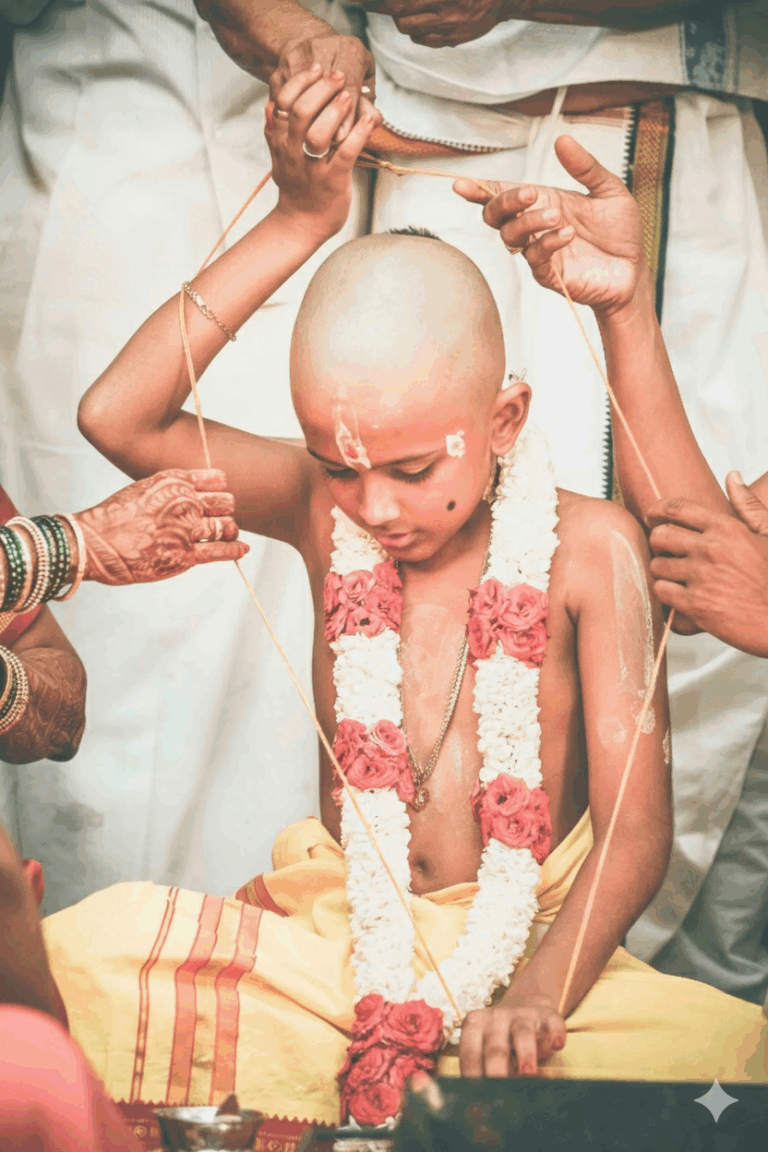
In Hindu tradition, the Sacred Thread Ceremony — known as Upanayan Sanskar, Vratbandh, or Munj — marks one of the most important milestones in a young boy’s spiritual journey. It symbolizes the beginning of a new phase in life where the child is introduced to the pursuit of knowledge, responsibility, and self-discipline.
The sacred thread, or Yajnopavitam (यज्ञोपवीतम्), is a consecrated cord made of three strands of cotton. These strands hold deep spiritual significance — representing the three debts (ऋण) every human being carries:
- Guru ऋण (Rushi Rin): The debt to one’s teachers and mentors.
- Pitru ऋण (Pitru Rin): The debt to one’s parents and ancestors.
- Rushi ऋण (Rushi Rin): The debt to sages and scholars who have preserved divine knowledge.
Additionally, the three strands also symbolize the divine powers of Goddess Parvati (Strength), Goddess Lakshmi (Wealth), and Goddess Saraswati (Knowledge).
The term ‘Upanayan’ literally means “leading nearer to Brahma” — the Supreme Consciousness. During this sacred ceremony, the boy is formally initiated into the study of the Vedas and taught the Gayatri Mantra through a ritual called Brahmopadesham, which symbolizes spiritual awakening and the pursuit of higher wisdom.
The Yajnopavitam is worn across the body — from the left shoulder to the right side — reminding the initiate (Brahmachari) to lead a pure, disciplined, and righteous life. The single knot on the thread represents the formless Brahman, the infinite energy that sustains all creation. The circular shape signifies the eternal nature of life and consciousness.
Performed under the guidance of Shri Prasad Pramod Joglekar Guruji, the Thread Ceremony is conducted according to authentic Vedic traditions — ensuring sanctity, spiritual precision, and divine blessings for the child’s bright and virtuous future.